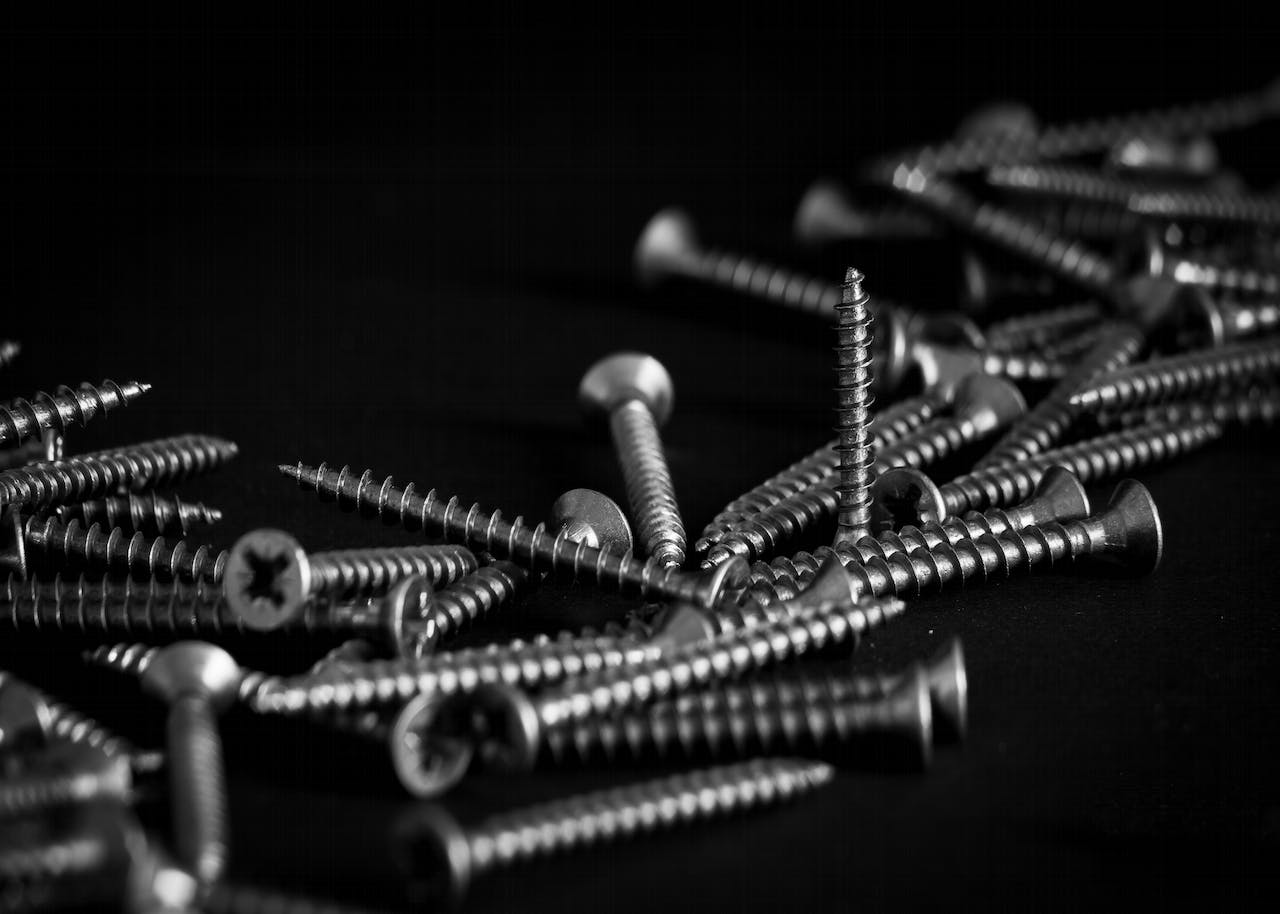


You're usually not thinking about fasteners when the truck pulls up. You're thinking about panel layout, weather, crew pace, trim details, and whether the substrate is going to fight you. Then a few months later, a callback comes in. The leak isn't from a dramatic failure. It's from one bad screw choice, one overdriven washer, one point style that didn't match the substrate, or one coating that started giving up long before the roof should have.
That's why screws self tapping deserve more attention than they usually get. On a metal roof, the screw isn't just a connector. It's part of the weather seal, part of the pull-out resistance, and part of the corrosion strategy. If you get that choice wrong, the roof can still look clean on day one and still become a problem roof later.
Table of Contents
- Why the Right Fastener Makes or Breaks a Metal Roof
- Self Tapping vs Self Drilling Screws The Critical Difference
- Anatomy of a High Performance Self Tapping Screw
- Choosing the Right Materials and Coatings for Durability
- Installation Best Practices for a Watertight Finish
- Troubleshooting Common Fastener Installation Issues
- How to Specify and Order the Right Screws for Your Job
Why the Right Fastener Makes or Breaks a Metal Roof
A metal roof rarely fails because the panel looked wrong in the bundle. It fails at penetrations, seams, transitions, and fastener lines. The screw is where installation quality gets locked into the roof system.
Pick the wrong fastener and you create specific failure paths. A poor coating choice starts corrosion. The wrong thread for the substrate reduces holding strength. A mismatched washer seat leaves a path for water. A point that doesn't suit the material forces the installer to lean harder on the driver, which raises the chance of stripping, walking, or snapping the head.
What the screw is actually doing
On a through-fastened metal roof, one screw has to do several jobs at once:
- Clamp the panel securely: It has to hold the panel without deforming it or stripping out the base material.
- Support the seal: The washer has to seat evenly so water stays out.
- Resist movement: Wind, thermal cycling, and vibration all work on the connection over time.
- Hold up outdoors: Sun, moisture, condensation, and jobsite exposure all test the screw finish.
If any one of those jobs is handled badly, the callback usually shows up as a leak, rust stain, loose panel, or lifted fastener.
Practical rule: Don't treat roofing screws like interchangeable hardware. Match the fastener to the panel, substrate, and exposure conditions before the first box gets opened.
A lot of installation issues blamed on “bad panels” or “bad sealant” really start with fastener selection. If you're working through-fastened panels, it helps to review the panel-side details too, especially on spacing, seat pressure, and placement. Contractor-facing guidance like through-fastened panel installation tips is useful because the screw choice only works when the install practice matches it.
Where contractors lose money
The expensive part isn't the screw. It's the labor to fix what the wrong screw causes.
Typical pain points include:
- Leaks at exposed fasteners: Usually tied to washer compression, angle, or improper seating.
- Rust bleed around the head: Often a material or coating mismatch for the environment.
- Loose panels after weather exposure: Usually a thread-to-substrate mismatch or stripped connection.
- Spinning screws during install: Often the wrong point or poor pilot hole prep.
That's a key reason to be picky. Better fastener selection doesn't just make install smoother. It prevents the kind of small failures that turn into repeat visits.
Self Tapping vs Self Drilling Screws The Critical Difference
Most confusion in roofing starts right here. People use the two terms like they mean the same thing. They don't.
A self-tapping screw forms threads as it goes in, but it typically works with a pilot hole. A self-drilling screw has a drill-point tip that cuts its own hole and forms threads in one operation. If you think of one as a tap following a prepared path and the other as a drill bit plus a fastener in one body, you're close enough for field use.

A 2023 Ponemon study cited by Hengke says 73% of assembly lines use self-tapping variants specifically for controlled, repeatable fastening where pilot holes are pre-engineered, which is a useful reminder that the distinction matters in actual production planning, not just terminology (Hengke on self-tapping screw function).
When self-tapping makes sense
Self-tapping screws are a good fit when alignment matters and the hole location is already established. That's common in controlled fabrication, repairs where you're matching existing locations, and assemblies where you want the screw to follow a precise path.
Use them when:
- Pilot holes are already part of the process: This gives repeatability and cleaner alignment.
- The substrate is thin and predictable: Thread formation is easier to control.
- You want less guesswork on entry location: The prepared hole does the positioning work.
That doesn't automatically make them slower in a bad way. Sometimes the separate prep step is what keeps the install clean.
When self-drilling is the better field choice
On roofing work, crews often choose self-drilling because it saves a step. That matters when you're fastening panels over framing or working through stacked materials where speed and consistency matter.
For example, #10 Fastgrip™ Selfdriller - Hi-Lo Metal to Wood screws use a MINI-DRILLER point to drive through metal panels, and the Hi-Lo thread is intended for metal-to-wood pull-out strength. That combination fits jobs where you need the point to get through the panel and the thread to hold in the wood below.
If you choose the wrong family of screw at the start, every install problem downstream gets harder to diagnose. The crew will blame the tool, then the panel, then the operator. The fastener was often the first mistake.
The mistake that keeps causing trouble
The common field error is using the terms loosely and ordering by name instead of by function. If the substrate and method call for a pilot hole, use a true self-tapping approach. If the application calls for drilling through the panel and into the base in one pass, use self-drilling.
That sounds basic, but it's where a lot of bad installs begin.
Anatomy of a High Performance Self Tapping Screw
A callback often starts with a screw that looked fine on install day. The head sat down, the panel looked tight, and nobody noticed that the threads never got a solid hold or the point was wrong for the substrate. On a metal roof, screw geometry decides whether the connection stays sealed after heat, movement, and wind start working on it.

Head design changes driving control
The head controls drive stability and washer compression. If the bit fit is sloppy or the head style does not match the detail, installers start fighting cam-out, wobble, and scarred panel finishes.
For exposed fastener roofing, the common choices each serve a different purpose:
- Hex washer head: The standard choice for panel attachment because it gives positive driver engagement and works with bonded sealing washers.
- Pancake head: Better for trim, lap, and low-clearance spots where a taller head can telegraph through the metal or interfere with fit-up.
- Drive fit: A clean bit-to-head fit reduces walking at startup and helps the installer stop before the washer is crushed.
That last point matters more than many crews think. A screw can be the right length and diameter and still fail early if the head design makes consistent seating hard.
Threads are where holding power is won or lost
Thread selection decides how the screw anchors below the panel. That is what resists pull-out, vibration, and panel movement over time.
In metal-to-wood roofing assemblies, Hi-Lo threads are often used because they bite wood aggressively without requiring as much torque as some other profiles. In thin metal, the thread has to form or engage cleanly without stripping the hole. If the thread pitch, height, or style does not match the base material, the connection may feel tight for the moment but lose clamp load after thermal cycling.
Field note: If a screw runs in with very little resistance and the head still seats, check the substrate before you trust it. Holding strength is determined below the panel line.
The point controls entry and substrate behavior
Point style affects startup, alignment, and installation torque. It also changes how much damage the screw can do when it is used in the wrong place.
A thread-forming point can work well in lighter-gauge material where the fastener is expected to cut or form its own mating thread after proper entry. In harder or thicker material, that same point can stall, walk, or snap if the installer keeps forcing it. On the roof, that usually shows up as burned driver bits, tilted screws, wallowed holes, and washers that never seat flat.
The practical rule is simple. If the point keeps fighting the material, stop and verify the fastener spec instead of forcing the install. That matters even more in coastal work and high-corrosion zones, where poor installation can damage protective finishes before the roof ever sees its first storm. Contractors working under stricter exposure requirements should review corrosion-resistant screw requirements in Miami-Dade County roofing applications.
Why the whole geometry has to work together
A high-performance screw is a matched system, not a pile of separate features. The head has to drive true. The threads have to hold in the actual substrate. The point has to enter without distorting the panel or overloading the tool. The shank has to transfer torque without twisting off.
Get one of those wrong and the roof may still go on. The problems show up later as loose fasteners, leaking washers, red rust, and panels that do not stay tight in wind.
That same logic applies outside roofing too. Material compatibility and fastener design affect long-term performance across exposed exterior assemblies, including products like XTREME EDEALS INC. deck hardware. On a roof, the margin for error is smaller because every bad fastener becomes a potential leak point.
Choosing the Right Materials and Coatings for Durability
Fastener failures outdoors usually start long before you can see them from the ground. The roof may still be tight, but the screw coating is already taking damage from moisture, trapped debris, temperature swings, and contact with dissimilar materials. That's why material and coating selection should be decided with the same care as panel finish selection.

The scale of the market tells you this isn't a niche detail. The global self-tapping screw market was valued at USD 8.4 billion in 2024 and is projected to reach USD 13.3 billion by 2033 at a 5.2% CAGR, driven by construction, automotive, electronics, and industrial manufacturing demand (Component Solutions Group on self-tapping screws). Roofing is part of that demand because exterior fastening requires more than basic thread formation. It requires durability in service.
Base material matters before the coating ever does
On roofing jobs, you're usually choosing between hardened carbon steel fasteners and stainless options depending on the exposure and compatibility requirements.
Carbon steel is common because it offers the strength needed for installation and clamp load. Stainless is often considered where corrosion resistance is the driving concern. The right answer depends on the jobsite, panel system, local climate, and what other metals are in contact with the fastener.
The mistake is assuming any coated fastener is “good enough outside.” Outside where? Dry inland exposure is not the same as salt air, industrial fallout, or a roof section that stays damp.
Coatings are your first corrosion defense
A coating isn't decoration. It's a barrier system.
What matters in practice:
- General exterior exposure: You want a coating that can handle weathering without failing early around the head and washer seat.
- High humidity or coastal conditions: Coating quality under these circumstances becomes a callback issue fast.
- Cut edge and drive damage resistance: Every install puts stress on the finish. A coating has to survive handling and driving, not just storage.
If you work in aggressive environments, it helps to think beyond roofing-only inventory and review corrosion-resistant options in adjacent categories too. For example, contractors comparing outdoor fastening materials may find XTREME EDEALS INC. deck hardware useful as a reference point for how stainless fasteners are positioned in moisture-prone exterior work.
The fastener coating doesn't fail all at once. It usually starts at the head, the washer seat, or damaged surfaces from driving. That's where rust stains begin.
Match the finish to the environment, not the bid sheet
If the job is in a severe exposure area, don't let upfront cost decide the fastener spec by itself. A failed screw line costs far more to service than choosing a more appropriate fastener from the start.
A practical review should include:
- Roof location: Inland, coastal, shaded, industrial, or high-moisture.
- Panel and trim material: Fastener compatibility matters.
- Expected maintenance access: Hard-to-service roofs need more conservative fastener choices.
- Code and local exposure requirements: Regional conditions often justify stricter corrosion planning.
For contractors working in harsh environments, code-oriented guidance like this article on corrosion-resistant screws in Miami-Dade County is worth reviewing because regional exposure can change what counts as an acceptable fastener.
Installation Best Practices for a Watertight Finish
A good screw can still leak if it's installed badly. Most exposed-fastener roof problems come from driving technique, alignment, and washer compression, not from the box label.

The details matter. Value Fastener notes that in self-drilling variants, a #5 drill point can penetrate up to 0.5 inches (12.7 mm) of steel, and benchmark torsional data cited there says a High Hat head provides 28% greater tool engagement, reduces slip-out by 35%, and extends tool life by 40% compared with standard hex heads. The same source also notes that for self-tapping screws used in metal roofing, over-torquing can strip threads while under-torquing can leave insufficient clamping force and contribute to wind uplift failure (Value Fastener on self-drilling screws and roofing installation behavior)).
Start with alignment and pilot prep
A crooked screw rarely becomes a watertight screw later. It has to enter square to the panel so the washer can compress evenly.
If your application calls for a pilot hole, test on scrap first and make sure the screw follows the hole cleanly. If the bit wanders or the hole is rough, the fastener will start off-axis and the washer will tell on you.
Three habits help immediately:
- Hold the driver square to the panel. Side loading creates bad seats and damaged holes.
- Clean metal chips as you go. Leftover swarf contributes to rust staining on finished panels.
- Watch the first turns. If the screw walks, back it out and reset. Don't force it straight later.
Set torque for the washer, not for speed
The right torque setting is the one that seats the washer without crushing it. That sounds obvious, but crews under pace pressure often drive until the screw “feels done,” and by then the rubber is already over-compressed.
A properly seated bonded washer should compress enough to seal, but not mushroom out past the metal backing. If you flatten the washer hard, you shorten its service life and raise the risk of leakage later.
On-site advice: Train installers to stop by washer shape, not by sound. The driver can't tell you when the rubber is overworked. Your eyes can.
Use the right driver setup
A worn socket, loose bit fit, or overly aggressive impact setting creates more bad installs than people admit. Clean engagement reduces slipping and head damage.
Check these before the run starts:
- Correct socket or bit fit: Slop at the tool transfers into damaged heads.
- Controlled clutch or trigger discipline: Especially important on exposed fasteners.
- Consistent downward pressure: Enough to keep engagement, not so much that you distort the panel.
If you're sorting out washer use across trim, panel, and accessory connections, this guide on when to use washers and when not to use washers helps clarify where a bonded washer is doing essential sealing work and where it isn't.
Check the finished line before leaving the roof
Don't judge the install screw by screw only. Step back and inspect the run.
Look for:
- Uniform washer compression
- Straight fastener lines
- No angled heads
- No loose metal filings left on the panel
- No spun-out fasteners hidden among good ones
That quick visual pass catches most of the leaks you'd otherwise meet again later.
Troubleshooting Common Fastener Installation Issues
A roof can look fine at install and still fail early if the fastener choice or drive method was wrong. The callback usually shows up as a leak, rust streak, loose panel, or lifted lap. The underlying cause is often deeper. Wrong point style for the steel thickness, thread design that never got proper bite, a coating that does not match the environment, or a driver angle that damaged the seal on day one.
That is why troubleshooting has to start with failure mode, not just symptom.
If a head snaps, the screw may have been forced into material that was too hard or too thick for that point style. If the washer leaks, the problem may be poor seating, but it can also mean the screw spun out and never pulled the panel tight. If a fastener line starts staining, look beyond the stain itself. Check for coating damage, dissimilar-metal exposure, and metal shavings left on the panel after install.
Common Self-Tapping Screw Installation Problems and Solutions
| Problem | Likely Cause(s) | Solution |
|---|---|---|
| Screw head snaps | Material too hard or thick for the screw design, excessive torque, angled driving | Check what the screw is going into, switch to a point style that matches the substrate, predrill if needed, keep the driver square |
| Head cams out or slips | Worn socket or poor bit fit, wrong angle, inconsistent pressure | Replace worn driving tools, use the correct driver size, hold steady pressure, start clean before full speed |
| Threads strip before clamp-up | Overdriving, pilot hole too large, thread style mismatched to substrate | Stop at proper seat, verify hole size, use a thread pattern that matches the base material |
| Washer leaks | Under-compression, over-compression, crooked seating, damaged washer | Remove and replace the fastener, drive square, confirm even washer contact all the way around |
| Screw spins without biting | Wrong point or thread for substrate, substrate deterioration, oversized hole | Move to solid material if possible, correct the fastener spec, inspect the deck or purlin before reinstalling |
| Fastener line shows rust staining | Coating damage, poor environment match, metal filings left on panel | Clean off filings, replace compromised screws, upgrade coating or base material for the exposure |
What to fix first
Start with the connection, not the complaint.
Check the screw angle first. A crooked screw can cut the washer unevenly, reduce pull-down, and open a leak path even if the fastener looks seated from a distance.
Then check holding power. If the screw turns freely or keeps tightening without drawing the panel down, the threads are gone or the substrate is failing. More trigger time will not save that connection.
Look closely at the washer seat and the metal around the hole. A washer crushed flat has lost service life. A washer sitting high on one side usually means the screw went in off-angle. Torn metal, oversized holes, or wallowed-out purlin steel point to mismatch between the screw design and the base material.
Material and coating problems show up later, which is why they get missed during install. In coastal or agricultural exposure, a low-grade plated screw can start staining long before the panel reaches the end of its life. On mixed-metal jobs, the wrong fastener finish can create corrosion at the head and around the washer seat. That is not just cosmetic. Rust at the fastener line often turns into seal failure and panel replacement if it is ignored.
If you are sorting out recurring leak calls, this guide on metal roofing screws leaking helps separate bad seals, stripped connections, and substrate-related failures.
Do not keep tightening a bad connection. Once the threads are stripped, the hole is enlarged, or the washer seat is damaged, replacement is usually faster and more reliable than trying to salvage it.
How to Specify and Order the Right Screws for Your Job
Ordering goes smoother when you specify by application instead of by habit. “Roofing screws” is too broad to be useful. You need to know what the screw is going through, what it's anchoring into, and what the roof will face after install.
The modern fastener category exists because screw design kept getting refined for real use. Prince Fastener notes that the concept dates back to the early 19th century, with the modern self-tapping design principle formally established in 1914, marking a major step in thread-forming fastening technology (Prince Fastener on the evolution of self-tapping screws). That history matters because today's roofing screws are engineered parts, not generic hardware-bin items.

The ordering checklist that keeps you out of trouble
Before you place the order, pin down these details:
- Connection type: Are you fastening metal to wood or metal to metal? That decision changes thread and point requirements immediately.
- Substrate behavior: Is the base soft, dense, thin, layered, or variable across the job?
- Exposure conditions: Dry inland work and high-corrosion environments shouldn't get the same screw by default.
- Head and washer needs: Exposed panel fastening and low-profile trim details don't call for the same head style.
- Finish compatibility: Make sure the fastener material and coating belong with the panel system and the climate.
Keep the spec readable for the crew
A good purchase spec should be short enough that the field team uses it. If the foreman can't explain the screw choice in plain language, there's a good chance the wrong boxes get opened on site.
A simple working spec usually includes:
- Fastener family
- Substrate pairing
- Required point style
- Head style and washer type
- Material or coating requirement
- Color or finish if needed
If you're ordering alongside installation prep, recommended tools for metal roof installation is worth checking so the crew has the right drivers, sockets, and support tools for the fastener you chose.
The practical goal is simple. Order screws that match the roof you're building, not the last one your shop installed.
If you need metal roofing fasteners and want a supplier focused on roofing-specific components, Contractor's Den is one option to review for metal-to-wood screws, self-drilling fasteners, and related accessories. It helps to send the application details up front so the screw, washer, and coating choices match the panel system and jobsite conditions before material goes to the roof.