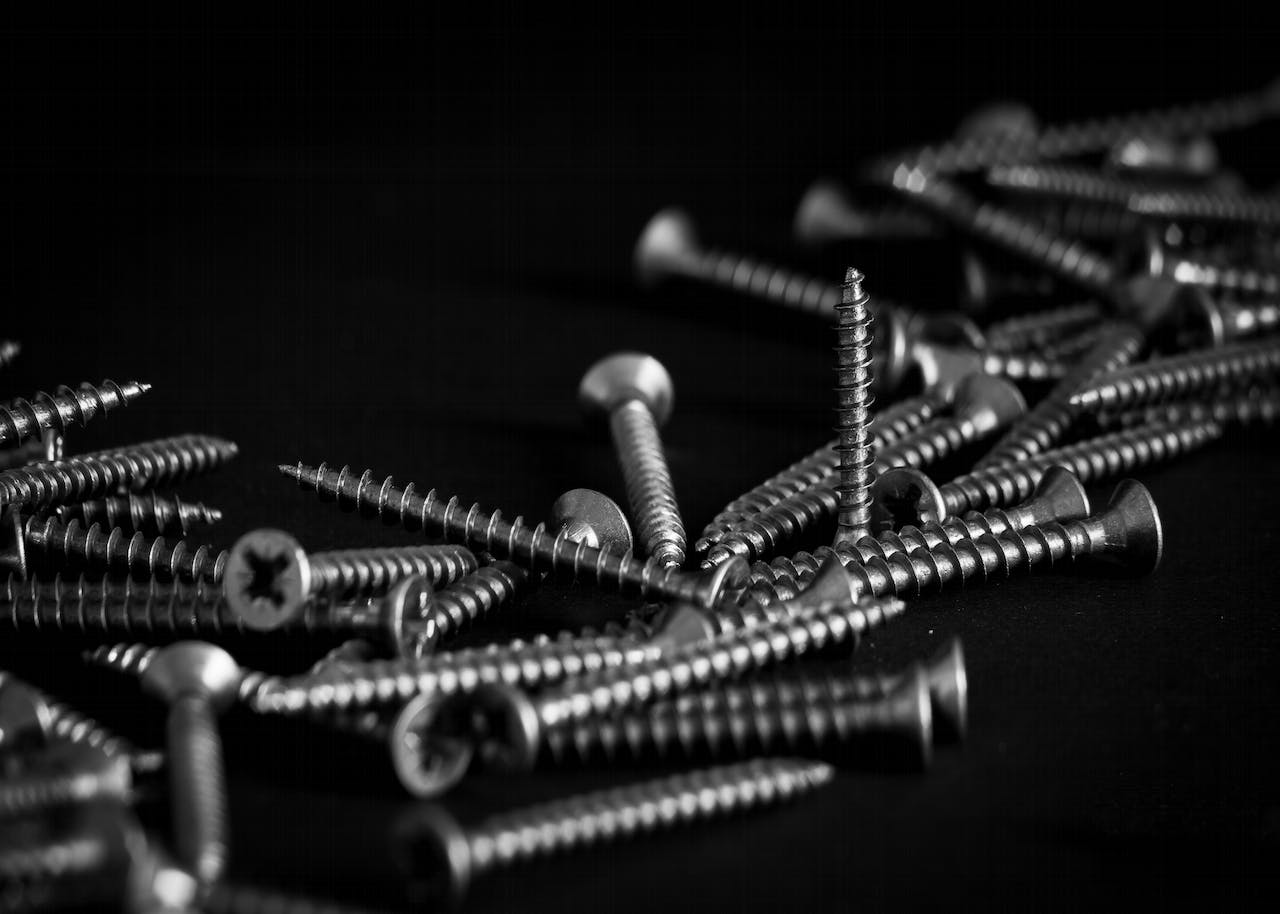


On a commercial low-slope job, the fastener usually gets the least attention right up until it causes the biggest problem. The membrane looks right. The board layout looks right. The roof goes down clean. Then months later, if the attachment was wrong for the deck, you're dealing with movement, loose plates, leaks, or a callback nobody wanted.
That's why Dekfast screws deserve more thought than they usually get. In low-slope roofing, the screw isn't just holding one layer to another. It's part of the attachment system that keeps insulation, plates, and membrane assemblies secured to steel, wood, or concrete under real jobsite conditions.
A lot of contractors already know the name. What matters more is knowing how to choose the right one for the roof you're standing on. Diameter alone doesn't tell the whole story. Neither does length. The deck type, insulation stack, corrosion exposure, and installation method all affect whether the assembly performs the way it should.
Table of Contents
- Introduction: The Most Important Component You Can't See
- What Makes Dekfast a Premier Low-Slope Fastener
- Decoding Dekfast Screw Specifications
- How to Select the Right Dekfast Screw for Your Job
- Installation Best Practices and Common Mistakes
- Sourcing Dekfast Screws from Contractor's Den
- Conclusion: Building Roofs That Last from the Deck Up
Introduction: The Most Important Component You Can't See
The easiest part of a roof to overlook is often the part doing the hardest work. On a low-slope assembly, nobody driving by sees the fasteners under the membrane or through the plates. But those fasteners are what tie the system back to the structure.
Dekfast screws are made for that role. They're used in low-slope roofing and insulation attachment, and the product line is offered in standardized diameters such as #12, #14, and #15 across wood, steel, and concrete deck applications, which tells you this isn't a one-off hardware item. It's a mature fastening system built around commercial roofing requirements, as shown in the Dekfast low-slope screw listings from Triangle Fastener.
Why small fastener decisions turn into big roof problems
A low-slope roof puts constant demand on the attachment system. Wind tries to lift it. Building movement works the assembly over time. Moisture exposure tests every metal component in the system. If the fastener choice doesn't match the substrate, the problem usually doesn't show up on day one. It shows up later, after the crew is gone.
That's why treating all roofing screws as interchangeable is a mistake. A screw that works well in one deck can be the wrong call in another. A length that looks fine on paper can miss proper engagement if the insulation package changes.
The roof may be sold on membrane, insulation, and warranty language, but field performance still depends on whether the attachment system was matched to the actual deck.
What matters on real jobs
Three things decide most of the fastener conversation:
- Deck material: Steel, wood, and concrete each demand different engagement behavior.
- Assembly thickness: Insulation thickness changes the required screw length and how the system loads the fastener.
- Performance expectation: Corrosion exposure and structural demand should drive selection, not habit.
Get those three right, and Dekfast screws do what they're supposed to do. Get them wrong, and the roof can look finished while the trouble is already built in.
What Makes Dekfast a Premier Low-Slope Fastener
A crew can install a roof exactly to pattern and still end up with attachment problems if the screw was chosen like a commodity item instead of a deck-specific fastener. Dekfast stands out because the line is built around the way low-slope roofs are assembled. The selection has to match steel, wood, or concrete, carry through the insulation package, and hold up under long-term roof movement and weather exposure.
Built for low-slope assemblies
Dekfast is a commercial roofing fastener family, not a grab-bag of general construction screws. Across the Dekfast low-slope roofing fastener line, you see standard diameters such as #12, #14, and #15, along with common field-ready features like a #3 Phillips drive and corrosion-resistant e-coat finishes.

A product like Low Slope - DEKFAST - #12 Self-Drill Screw, Phillips #3, Truss Head | DF-12-PH3 is a good example of that approach. The #3 Phillips drive, truss head, and low-slope format are familiar in the field, but its key advantage is that the screw fits into a system where substrate, plate, and assembly thickness are part of the buying decision.
That matters on commercial work. Purchasing stays cleaner, submittals are easier to verify, and crews are less likely to substitute a screw that drills fine but gives up pullout or corrosion resistance in service.
Why roofers don't treat them like generic screws
Roofers who do a lot of low-slope work usually stop talking about screws in generic terms. They talk about steel deck versus wood deck. They ask how much insulation is in the stack-up. They check the uplift requirement before they order. That is the right way to judge Dekfast.
They're often specified because they are Factory Mutual approved, and SFS notes in its Dekfast fastener technical overview that the reduced drill point is engineered to create a minimum opening and improve pull-out values through superior thread engagement compared with standard drill points. In the field, that translates into a fastener designed for controlled installation and reliable engagement, not just fast penetration.
Practical rule: If the roof has a defined substrate, uplift requirement, and attachment pattern, buy the fastener as part of the roof system.
The better approach is straightforward. Match the fastener to the deck, confirm the right length for the full insulation package, and use a screw built for the performance target of that assembly. Assuming one screw can cover every low-slope condition usually creates problems later, especially when deck type or assembly thickness changes from one area of the job to another.
Decoding Dekfast Screw Specifications
A box label can look straightforward until the crew hits mixed deck conditions, thicker insulation than expected, or an uplift requirement that leaves no room for a close-enough fastener. Dekfast specs matter because they tell you whether the screw is built for that assembly, not just whether it fits the gun.

What the common specs tell you
Dekfast screws are used across low-slope assemblies with steel, wood, and concrete substrates, but the spec line only helps if you read it as a selection tool. Common diameters such as #12, #14, and #15 point to different attachment roles within the product family. Head style, drive size, point design, and coating also carry practical meaning on the roof.
A #3 Phillips drive is familiar to crews and easy to match with standard field tooling. That matters for installation speed, but it also affects consistency. If the bit fit is sloppy or the drive style is wrong for the fastener, cam-out and head damage show up fast, especially when crews are driving hundreds of fasteners in a shift.
Head style matters for bearing and attachment performance. In low-slope work, a truss-style head is common because it spreads load more effectively across the attached component than a narrower head. That becomes more important when the screw is working with plates, insulation facers, or cover boards that can be damaged by concentrated pressure.
Coating and material choice decide how well the fastener holds up after install. E-coat is common for many roof assemblies, but exposure conditions still matter. A dry inland project and a roof near salt air or industrial contaminants are not the same corrosion environment. Contractors who also install exposed-fastener metal systems can compare those material choices against this guide to metal roofing screw types and materials.
How to read the practical meaning of the spec sheet
A useful spec sheet answers the questions a foreman asks before the first row goes down.
- Diameter: #12, #14, and #15 indicate more than size. They help identify the fastener's intended duty and approved use within a roof assembly.
- Head and drive: Drive type affects bit fit, speed, and the chance of stripping during installation.
- Coating or material: E-coat and stainless options point to the level of corrosion resistance the assembly may need.
- Thread and point geometry: These features affect how the screw drills, how much substrate it engages, and how well it holds once seated.
- Length: Length has to account for the full stack-up, including insulation and cover board thickness, while still delivering proper embedment or penetration into the deck.
Read the screw spec the same way you'd read a membrane spec. It defines the conditions the manufacturer had in mind for that product.
One mistake I see often is buyers stopping at diameter and length. That is only part of the decision. The SFS Dekfast product line overview shows a full family of fastener types, which is why "Dekfast screw" should be treated as a category with different options for different substrates and assemblies.
Use the specification to match the screw to the deck, the insulation thickness, and the service conditions. Buying by size alone usually leads to avoidable problems with installation, corrosion resistance, or holding performance.
How to Select the Right Dekfast Screw for Your Job
If there's one mistake buyers make with Dekfast screws, it's starting with the screw instead of the roof. Selection gets easier when you work in the same order the roof does. Start at the deck. Add the insulation package. Then check the performance requirement.
Start with the deck, not the screw bucket
Deck material is the first filter because substrate governs thread engagement, drilling behavior, and holding performance.
For steel decks, the screw needs to penetrate cleanly and engage without tearing up the deck opening. Drill point design and thread engagement are more significant than brand familiarity. A screw that drives fast but leaves a poor opening can cost you in holding performance.
For wood decks, the conversation shifts toward bite, pull-out behavior, and avoiding installation habits that damage the substrate. Wood often forgives more than steel during install, but that can lead crews to get sloppy with angle, torque, or length selection.
For concrete decks, you need to pay even closer attention to the exact fastener type approved for the assembly. Concrete isn't just “another deck option.” It changes the attachment approach and should always be treated as its own specification path.
A related issue is whether the assembly needs a screw only, or a screw working with the proper plate and attachment pattern. If you're comparing low-slope fastener setups, the trade-offs in choosing the right roof fastener and washer configuration are useful context.
Length selection and insulation thickness
Length is where many otherwise good orders go sideways. The right Dekfast screw has to pass through the insulation package and attached component, then achieve proper engagement in the deck. If the roof build-up changes and nobody updates the fastener length, the crew can install an entire area with the wrong attachment before anyone catches it.
A few field habits help:
- Measure the actual assembly: Don't rely only on plan assumptions if the board package changed in procurement or in the field.
- Check engagement against the substrate: The required length depends on what's below the insulation, not just what's above it.
- Avoid overcompensating: Ordering extra-long screws “just to be safe” can create installation issues of its own, especially if crews overdrive to bury the head or plate properly.
Dekfast screw selection by deck type
| Deck Material | Recommended Dekfast Feature | Key Consideration | Example Application |
|---|---|---|---|
| Steel | Self-drilling point with strong thread engagement | Clean penetration and reliable hold in metal deck | Insulation or membrane attachment over structural steel deck |
| Wood | Thread design suited to withdrawal resistance in wood | Proper bite without sloppy overdriving | Low-slope assembly over wood deck |
| Concrete | Substrate-specific Dekfast option approved for concrete use | Follow deck-specific specification rather than treating it like steel or wood | Low-slope attachment into concrete deck |
Performance data should also shape the decision. In a stainless #14 specification, SFS lists 4,000 lbf tensile, 2,800 lbf shear, and 100 lbf-in torsional capacity, along with 15/15 Kesternich per FM 4470 and 950-hour salt spray per ASTM B117 in the DF-S4-14 stainless data sheet. That's a good reminder that you shouldn't choose by diameter alone. Mechanical load and corrosion exposure both matter.
If the job has aggressive exposure, don't let the purchasing decision stop at “same size, same thing.” Size is only one part of performance.
What works is a three-step check: substrate, assembly thickness, performance requirement. What doesn't work is picking from memory because the last job happened to use the same diameter.
Installation Best Practices and Common Mistakes
Even the right Dekfast screw can be installed badly. Most call-backs tied to fasteners aren't caused by the catalog choice alone. They come from poor control at the gun, inconsistent depth, or crews forcing speed where the roof needs precision.

What good installation looks like
A clean installation starts before the first screw goes down. The crew should know the deck type, the correct fastener length, the required plate or head configuration, and the target seating condition. On low-slope work, “close enough” usually isn't close enough.
Use a depth-controlled screw gun with the proper bit for the drive. Keep the fastener perpendicular to the deck so the point enters cleanly and the head or plate seats flat. Watch the compression at the attachment point. You want the assembly secured, not crushed.
Good crews also keep checking. They don't assume the first area and the last area are matching if the deck changes, the insulation stack varies, or a different installer takes over.
For crews who switch between roof systems often, some habits from through-fastened panel installation practices still carry over well, especially around driver control and consistency.
Mistakes that create callbacks
Bad installation usually falls into a few familiar categories:
- Using the wrong tool: An impact driver can make it too easy to overdrive, cam out, or lose control of seating.
- Driving at an angle: Angled installation reduces clean engagement and can leave the head or plate seated improperly.
- Overdriving: Too much force can damage the attached component, reduce effective clamp load, or distort the assembly.
- Underdriving: A proud fastener or poorly seated plate leaves the system vulnerable to movement and flutter.
- Ignoring substrate changes: The roof may not be uniform across the whole job. Fastener behavior can change when the deck changes.
A fastener that looks installed isn't always installed correctly. On low-slope roofs, seating depth and alignment matter as much as whether the screw “grabbed.”
This video gives a useful visual reference for field handling and installation rhythm:
A practical quality-control check is to pull the crew back after the first installed area and inspect fastener alignment, seating consistency, and deck engagement before production gets too far ahead. Fixing technique early is cheap. Fixing a large section after the membrane is in play isn't.
Sourcing Dekfast Screws from Contractor's Den
Once you know the deck, required length, and performance target, sourcing gets simpler. What matters most is buying from a supplier that clearly separates low-slope fastener options instead of lumping everything into a generic screw category.
That's where organized product access helps. If you already know you need a truss-head self-drill option in the Dekfast family, a direct item page like the Low Slope - DEKFAST - #14 Self-Drill Screw, Phillips #3, Truss Head | DF-14-PH3 makes it easier to verify you're looking at the right product format for a low-slope application.
From a contractor's standpoint, actual value isn't hype. It's being able to source low-slope fasteners, order in job-ready quantities, and get support when a roof assembly raises a specification question. That matters more than marketing language when the job is scheduled and the crew is waiting.
A good supplier should help you do three things well:
- Match the fastener to the assembly: Not every Dekfast option belongs in every deck.
- Avoid ordering errors: Length, head style, and application type need to line up before the pallet shows up.
- Keep the job moving: Contractors need supply continuity, not product confusion.
If the project has unusual corrosion exposure or a deck condition that isn't straightforward, it's worth confirming the selection before ordering rather than correcting it in the field.
Conclusion: Building Roofs That Last from the Deck Up
Dekfast screws sit low in the budget conversation and high in the performance conversation. That's the right way to think about them. In low-slope roofing, the fastener isn't a commodity part. It's an engineered attachment component that has to match the deck, the assembly thickness, and the service conditions.
The best outcomes usually come from a simple discipline. Start with the substrate. Confirm the insulation build-up. Choose for performance, not habit. Then install with control, not speed for its own sake.
Contractors who do that tend to avoid the most common fastener problems. They don't assume steel, wood, and concrete can all be handled the same way. They don't let screw length become an afterthought. And they don't treat installation technique like a minor detail.
A roof lasts from the deck up. If the attachment is wrong, the rest of the system has to work around that mistake. If the attachment is right, the whole assembly has a better chance to perform the way it was designed to.
If you're sourcing low-slope fastening products and want a straightforward place to compare options, Contractor's Den is worth a look. You can browse the catalog, check the low-slope product line, or reach out to their team if you need help matching a Dekfast screw to your deck type and roof assembly.